
Jordi van Swam
Gameplay programmer
About Me
Hello, my name is Jordi van Swam
I'm a 26 year old software engineer with over 8 years of experience developing desktop and VR applications using both unreal and unity. In my work i use a combination of c++, c#, blueprints and other engine tools to achieve the best possible result. My flexible skill set in combination with my many years of working in mixed discipline teams have proven to be of value to the any project I've worked on.
Skills
8 Years Project Experience
| Software | Languages | Spoken languages | Soft Skills |
|---|---|---|---|
| > Unreal Engine: 7 Years | > C++: 4 Years | > Dutch | > Teamwork |
| > Unity Engine: 1 Year | > C#: 1.5 Years | > English | > Communication |
| > Visual Studio: 3 Years | > Python: 6 months | > | > Responsibility |
Featured Projects
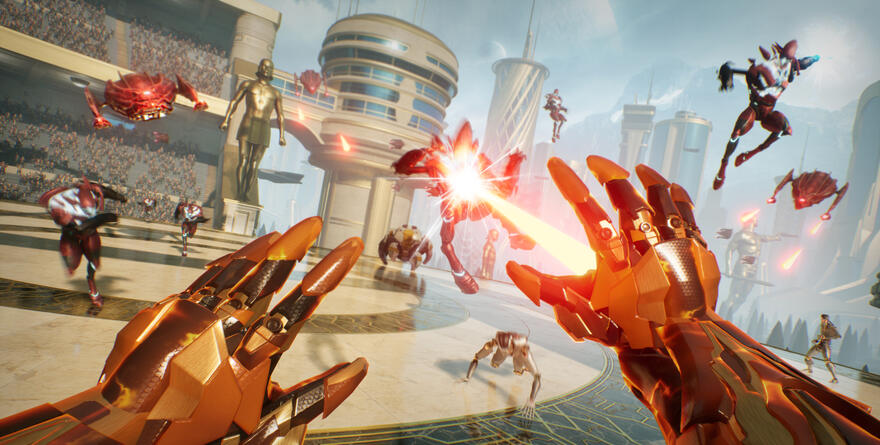
Super Nova ☆
VR Combat-Action game
Unannounced Shooter
4 player coop shooter
Shattered Lights
Roomscale VR horror game
Pre-Flight Checklist
VR Training for pilots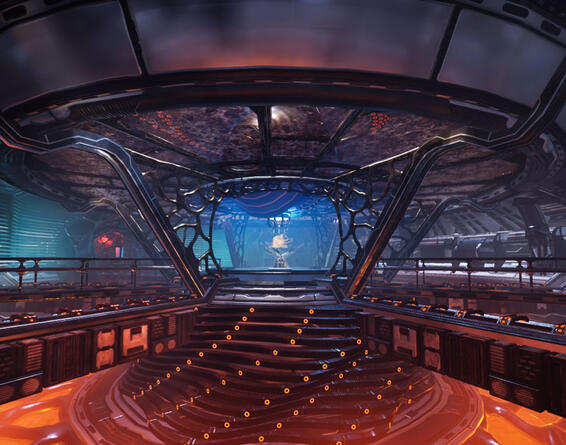
Bioside
Zero gravity VR Shooter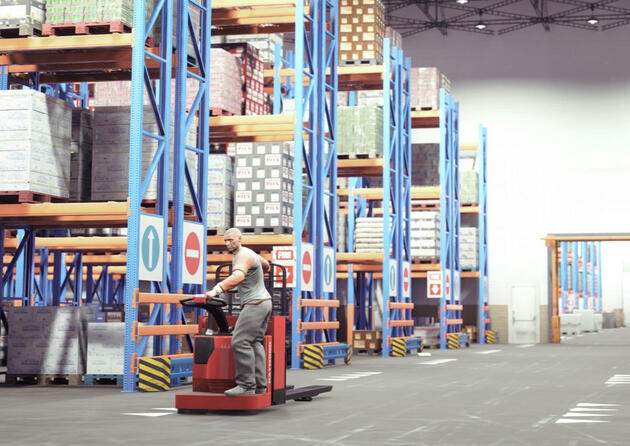
Active Safety
VR training for PIT operators
Contact
Interested by what you've seen so far?
Consider leaving me a message on one of the following places.
Email: [email protected]
Phone: +31 639375247
LinkedIn: Linkedin.com/in/jordi-van-swam
Page Under Construction
Sorry This page is still under construction. Please check back at a later date.
Shattered Lights - student project
A Roomscale VR horror game where you physically walk around to explore
Project Info
Project Duration: 1 year
Team size: 20 people
Engine: Unreal 4
Platform: PC VR
Project Status: Completed
Store: Steam page
Highlighted work
Project trailer
Project Summary
Shattered lights is a VR horror game with a unique way take on player locomotion. Using impossible geometry the player is able to seamlessly explore an underground bunker by only walking around their playspace. With rooms changing around the player while out of their sight.
Personal Contributions
On this project i worked together with several other programmers and designers. As such a lot of work was devided between us. I personally focused on the features most directly connected to the player. The most important of which was our unique non-euclidian locomotion system. Wich i performed the research and implementation for. But i also worked on several smaller systems. Such as player interactables, gameplay encounters, sounds, optimizations and many more.
Player Locomotion
For our unique locomotion system we wanted to player to only have to physically walk in their playspace. To achieve this we initially experimented with a seemless portal system as this would allow for the greates flexbility. However due to limitations in unreal's VR render pipline we ultimately had to scrap this.Our backup plan was to teleport the player between 2 rooms and ensure that all visible elements in both rooms at the teleport location are identical to create the seemless experience.
This limited the extend of available space in each room as we had to dedicate space to the transistions.To help eleviate some of these limitations we also added elevators to allow for easy changes of scenery. And we added doors to enable us to block sightlines without blocking access. Which helped us hide additional transitions.In the end the largest problem with this approach was the lighting. As often lights from off screen could not be replicated between room transitions due to the walls and environment chanching. Some way to bake lighting and copy it over between rooms would have saved us a lot of time.
Original portal prototype - Failed to work in VR
Hidden teleportation prototype for VR compatability
Interactable Items
Interaction in a VR game is important and as such we made several interactable item in our game. Some of these served gameplay functions such as elevators, doors and keycards. But there are also several other items that are just there for the player to play with.
Showcase of several interactables
Optimization
Another important aspect of any VR title is performance. A smooth 90 fps experience must be maintained at all time to prefent motion sickness. As such i used this project as an opportunity to learn the basics of game optimizations. From limiting drawcalls to LOD's and the difference between forward and deferred rendering as well as how to use tools like renderdoc to pinpoint bottlenecks.
And through these effort we were able to get shattered lights to run smoothly on our intended hardware.
Unannouced Shooter
A 4 player coop shooter inspired by helldivers